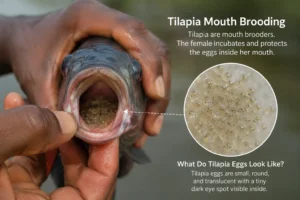
The Fascinating Biology: Why Eggs Are in the Mouth
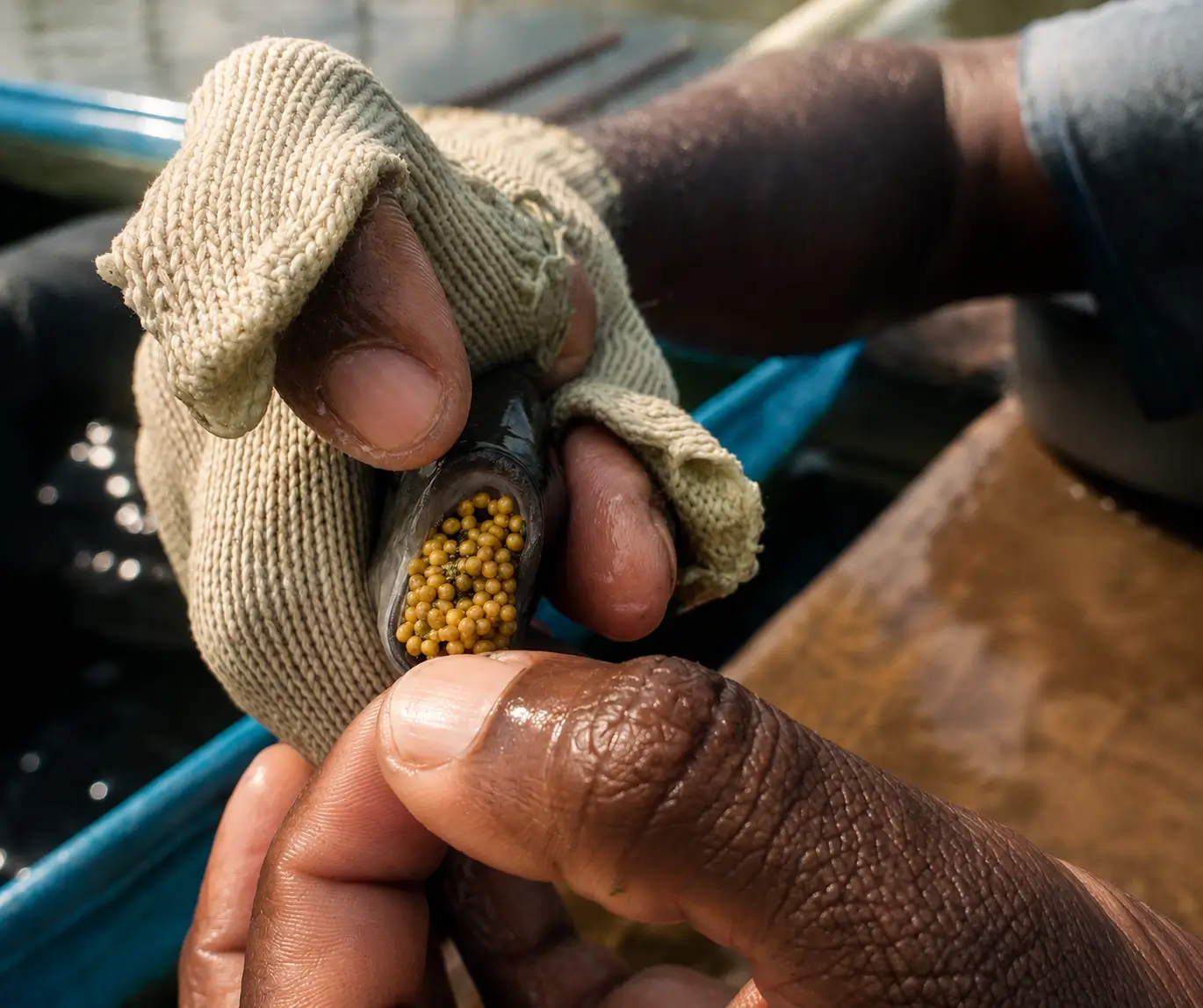
From Natural Wonder to Hatchery Innovation: The “Clutch Removal” Method
How Are Eggs Harvested from the Mouth? (A Step-by-Step Guide)
The process is a delicate blend of biology, timing, and gentle handling. Here’s what it looks like at a modern tilapia intensive hatchery:
- Broodstock Conditioning & Spawning: Mature male and female tilapia are placed together in specialized enclosures, often fine-mesh net cages called hapas, within ponds or tanks. These allow for easy monitoring. The fish are conditioned with high-quality feed and an optimal environment—temperatures ideally between 27–29°C (80–84°F) to trigger spawning.
- Identification of “Holding” Females: After a spawning cycle of about 5–14 days, trained staff carefully examine the females. A female incubating eggs in her mouth is said to be “holding.” Technicians can spot her by her slightly distended buccal cavity and characteristic behavior.
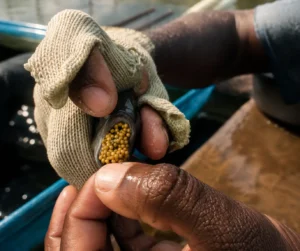
- The Gentle Extraction: This is the critical moment. A female is gently but firmly held. With practiced care, the technician opens her mouth and rinses or gently shakes the mass of fertilized eggs—often numbering in the hundreds—into a container of clean water. The goal is to retrieve the developing embryos without harming the mother. The entire process, when done correctly, is remarkably stress-free for the fish.
- Egg Sorting and Disinfection: The collected eggs are examined. Skilled technicians can estimate their age by color: freshly fertilized eggs are a vibrant light yellow, while more developed eggs turn a dark orange or brown. Eggs of a similar developmental stage are grouped together and often given a brief disinfectant bath to prevent fungal and bacterial issues.
- Artificial Incubation: This is where the real magic happens. The eggs are transferred to specialized upwelling incubators—often clear, round-bottomed jars. A constant, gentle flow of clean, high-quality water keeps the eggs in a slow, tumbling motion, mimicking the churning action of the mother’s mouth and preventing them from clumping.
A Crucial Biological Note: Interestingly, researchers have found that in some cases, fertilization itself can even occur inside the female’s mouth cavity immediately after the eggs are collected, as the male’s milt is swept in with them.
Why Go to All This Trouble? The Compelling Advantages of Mouth Collection & Artificial Incubation
- Dramatically More Frequent Spawning: This is the single biggest advantage. A female tilapia that is allowed to naturally incubate her eggs will have a spawning interval of around 30–50 days. However, if the eggs are removed from her mouth, she quickly ceases parental care behavior, resumes feeding, and can be ready to spawn again in as little as 17–23 days. This can effectively double or even triple her lifetime fry output.
- Superior Egg Hatching Rates and Fry Survival: Artificial incubators offer a pristine, controlled environment free from predators, cannibalistic adults, and sudden temperature swings. While natural hatching success can be variable, modern intensive tilapia hatcheries routinely achieve hatching rates of up to 95%, a figure that handily eclipses many natural methods.
- Production of Uniform, High-Quality Monosex Fingerlings: To produce all-male (monosex) tilapia populations—which grow faster and are preferred for commercial farming—fry must be given a hormone-treated feed at a very precise, early stage. The clutch removal method allows hatcheries to harvest thousands of eggs that are all the exact same age and size, ensuring that every single fry receives the proper treatment dose and resulting in a uniform crop of high-grade fingerlings.
- Higher Overall Productivity: By removing the eggs, the energetic cost of parental care for the female is virtually eliminated. She diverts that energy into producing more eggs. The result is a significantly higher biomass of seed produced per kilogram of female broodstock per year. In some studies, artificial incubation has been shown to triple net economic returns compared to natural systems.
Challenges and the Delicate Art of Hatchery Management
- Potential for Fungal Infections: Eggs in artificial incubators can be susceptible to Saprolegnia fungus. This is combated with regular egg disinfection and impeccable water quality.
- The Risk of Egg-Bound Females: If females are not regularly checked, they may attempt to hold a spawn for too long. Gentle and frequent handling is key.
- Broodstock Welfare: Some species, like O. niloticus, can be more prone to spitting out their eggs when disturbed, requiring a calm and acclimated broodstock.
Frequently Asked Questions (FAQ)
The technique is used specifically for mouthbrooding species, primarily from the Oreochromis genus (like Nile and Mozambique tilapia). It is not applicable to substrate-spawning species like Tilapia zillii
Yes. By dramatically increasing fry production per female, it reduces the total number of broodstock needed to meet demand, lowering the feed and resource footprint of a hatchery and enabling more efficient land and water use.
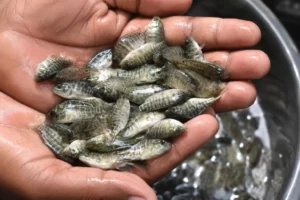
Newly hatched fry (called “sac-fry”) absorb their yolk sac over 5–10 days. Once the sac is absorbed, they become “swim-up” fry and are transferred to nursery tanks, where they are fed a finely ground starter diet.
Conclusion: The Mouth is Mightier
The practice of collecting tilapia eggs from the mouth of the female broodstock is far more than just a quirky “did you know” fact. It is a brilliant example of how understanding and working with nature can lead to technological breakthroughs. By intervening at a specific point in the tilapia’s natural reproductive cycle, modern aquaculture has unlocked the fish’s full productive potential, ensuring a steady, sustainable, and affordable supply of this crucial food source for millions of people around the globe. Next time you see tilapia on a menu or at the market, you’ll know the incredible, hidden journey that began in a mother’s mouth.